S26-39 The History of NASA NEW
Class | This class is completed
We are living in the space age. Leading and guiding our advances has been the mission of the National Aeronautics and Space Administration (NASA). The preceding classes have looked at space missions carrying astronauts into earth orbit, on to the surface of the Moon and living in space aboard the International Space Station (ISS). But there is more to NASA than astronauts. These classes will explore the robotic science missions, Voyager’s mission to the planets, the Mars landers and rovers and Galileo’s mission to the moons of Jupiter. We will also detail the findings of the Hubble and Webb space telescopes. We will begin the classes with the contribution of the aeronautics research centers to the aerospace industry; the first “A” in NASA.
Thomas Benson
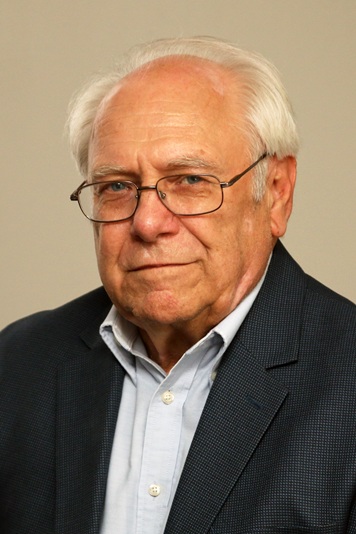 | Tom Benson is a Retired Senior Research Engineer from the NASA Glenn Research Center. He retired in 2015 after more than 35 years of service at NASA Glenn. For the first 20 years, he specialized in computer modeling of supersonic and hypersonic flows in propulsion systems. The last 15 years were mainly devoted to educational outreach.
Tom earned a Bachelor and Master’s degree in Aerospace Engineering from Ohio State University in 1971. He then spent four years in the Air Force at Wright Patterson AFB doing high speed inlet testing and installed engine performance calculations for the F-5E, YF-16, YF-17, and B1-A. He returned to graduate school at OSU and passed the qualifiers for a PhD before coming to work at NASA in 1978. He is a board member of the Cleveland Astronomical Society, where he has given talks on the Apollo Moon Program, the International Space Station, and NASA Science Missions. |